

Registering a car in California is a crucial step for any new owner, ensuring legal compliance and smooth operation on state roads. However, navigating the process can be daunting, given the complex procedures and paperwork involved. This comprehensive guide aims to demystify the journey, providing clear instructions and expert insights. We’ll detail each step, from gathering essential documents to the critical role of DMV VIN verification, ensuring you’re fully prepared for a seamless registration experience in the Golden State.
- Prepare Necessary Documents for Car Registration
- Visit Your Local California DMV Office
- Complete Vehicle Inspection and Emission Test
- Submit Application and Pay Registration Fees
- Receive Your Vehicle's Title and Registration Papers
Prepare Necessary Documents for Car Registration

To register a car in California, preparing the necessary documents is a crucial step. This process involves gathering specific paperwork to ensure your vehicle complies with state regulations. One essential document for car registration in California is the Vehicle Identification Number (VIN) verification. The California Department of Motor Vehicles (DMV) requires this verification as part of the registration process, ensuring that every registered vehicle matches its corresponding VIN record.
The most efficient way to accomplish this step is through a mobile VIN verification service. These services allow you to obtain an official VIN inspection from the comfort of your home or office. By utilizing a mobile VIN verifier, such as those offered by authorized third-party providers, you can ensure that your vehicle’s information matches the DMV’s records. This method streamlines the preparation process and saves time compared to traditional methods, which might require visits to both the dealership and the DMV.
For instance, consider a scenario where a California resident is preparing to register their recently purchased used car. Instead of navigating through busy dealerships and long DMV lines, they can simply schedule a mobile VIN inspection. A professional examiner will visit them, verify the VIN using advanced technology, and provide an official report. This digital document can then be submitted alongside other required paperwork to the DMV for seamless car registration. By adopting modern solutions like mobile VIN verification, Californians can make the process more convenient and hassle-free.
Visit Your Local California DMV Office

Visiting your local California DMV office is a crucial step in registering your car. This process involves several key procedures designed to ensure vehicle safety and compliance with state regulations. One of the most critical aspects of this visit is the DMV VIN verification process, where your Vehicle Identification Number (VIN) is cross-checked against the state’s records. This step is essential to prevent fraud and ensures that your vehicle meets all legal requirements for registration.
When you arrive at the DMV, be prepared to present specific documents such as proof of ownership, insurance, and identification. Additionally, many California DMV offices now offer mobile VIN verification services, allowing you to complete this part of the process from the comfort of your car or home. Mobile vin verifiers can streamline the inspection by comparing your vehicle’s VIN against national databases, providing instant validation. This modern approach saves time and effort while maintaining accuracy in vehicle registration.
If issues arise during the initial DMV visit, don’t despair; simple corrections are often feasible. For instance, if there’s a discrepancy in the vehicle’s description or history, you can rectify it by providing additional documents or clearing up any errors with relevant authorities. Regularly conducting vin inspections, whether through on-site DMV visits or mobile verifiers, is vital for maintaining your vehicle’s registration status and ensuring ongoing compliance. By staying proactive and adhering to California’s guidelines, you’ll ensure a smooth car registration process every time.
Complete Vehicle Inspection and Emission Test
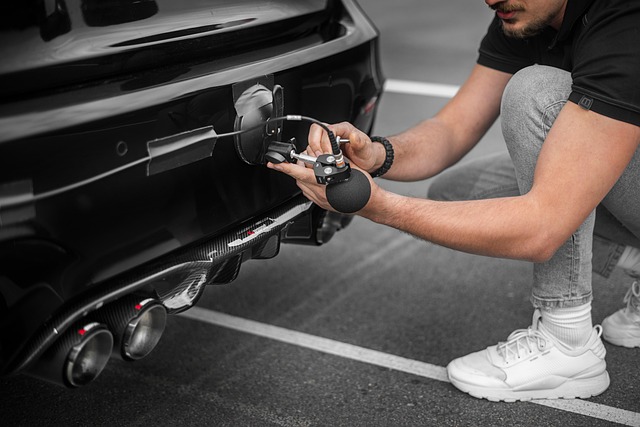
Registering a car in California involves several crucial steps, and one of the key aspects is ensuring your vehicle meets environmental standards through a complete Vehicle Inspection and Emission Test. This process is vital to maintaining air quality and public health, with the state requiring regular checks for all vehicles, regardless of age. The California Department of Motor Vehicles (DMV) plays a pivotal role in this, offering both stationary and mobile vin verification services to ensure every car on California’s roads adheres to strict regulations.
A mobile vin verifier, as the name suggests, is a service that brings the inspection process directly to you. This can be particularly convenient for those with busy schedules or vehicles that are not readily accessible to a traditional inspection station. The DMV provides this option, allowing you to complete your vehicle’s vin inspection and emission test without the hassle of driving to a fixed location. This not only saves time but also accommodates remote areas where stationary testing centers might be scarce.
During the inspection, trained professionals will conduct a thorough check, examining various components of your car, including the exhaust system, tires, brakes, lights, and more. They’ll also use advanced technology for DMV vin verification, such as scanning the vehicle’s unique identification number (VIN) to cross-reference data against state records. This ensures accuracy and helps identify any potential issues or discrepancies that might affect your registration. It’s important to understand that these inspections are not just a formality but a necessary step to keep California’s roads safe and environmentally friendly, with regular data showing that strict emission standards have led to significant improvements in air quality over the years.
Submit Application and Pay Registration Fees

To register your car in California, you’ll need to submit an application along with paying the required registration fees. The process begins with gathering essential documents, including proof of ownership, vehicle identification number (VIN) inspection results, and applicable fees. One crucial step, often overlooked, is ensuring a valid DMV VIN verification for your vehicle. This involves obtaining a current, accurate VIN report to prove the authenticity and history of your car.
You can facilitate this process through various methods. Many California residents opt for a traditional, in-person visit to a local Department of Motor Vehicles (DMV) office, where they’ll be guided through the application process and have their VIN inspected on-site. Alternatively, you can leverage modern technology with mobile VIN verification services that enable you to capture and transmit your vehicle’s unique 17-character identifier remotely, making it easier than ever before to maintain compliance with California’s registration requirements.
Online platforms offer another convenient option, allowing you to submit applications digitally while still ensuring a proper DMV VIN verification. These services typically involve initial document uploads, followed by a remote inspection where the platform provides clear instructions on how to conduct a mobile VIN inspection, ensuring your car’s history is accurately captured. Once all documents are in order and the VIN inspection is complete, you’ll be directed to pay the registration fees, which vary based on your vehicle type and other factors. Properly executing these steps ensures your car is legally registered and ready for California’s roads.
Receive Your Vehicle's Title and Registration Papers
After successfully completing your California car registration application at the Department of Motor Vehicles (DMV), the next crucial step is to receive your vehicle’s title and registration papers. These documents are essential not only for legal compliance but also serve as proof of ownership and vehicle identification. The process involves ensuring that the vehicle’s Vehicle Identification Number (VIN) is accurately verified, a task that can be efficiently accomplished through a DMV VIN verification or, for added convenience, a mobile VIN verifier.
When you obtain your car’s title, carefully review it to ensure all information is correct, including the VIN. This unique 17-character code is a critical component of your vehicle’s identity and must match the details in your registration application. Many California DMV locations now offer on-site VIN inspection services, allowing you to verify the VIN against your paperwork while you wait. Alternatively, some third-party providers offer mobile VIN verification services, which can be particularly useful if you’ve recently purchased a car from out of state and need to register it quickly.
Once you’ve confirmed the VIN’s accuracy, proceed with confidence in completing the registration process. It’s important to remember that proper documentation is key to avoiding future issues, such as driving violations or legal complications related to ownership. For instance, data from the California DMV shows that accurate and up-to-date records significantly reduce processing times during registration renewals. Therefore, taking the time to ensure your VIN is correctly documented can save you both time and potential headaches down the road.
By meticulously preparing your documents, visiting a local California DMV office, undergoing necessary vehicle inspections including a DMV VIN verification, completing the application process, and paying registration fees, you’ve taken significant steps to legally register your car in California. Receiving your vehicle’s title and registration papers signifies not only compliance with state regulations but also your official recognition as the car’s owner. This comprehensive guide ensures a smooth registration process, empowering you with the knowledge to navigate this essential administrative task efficiently.